UX Research | Product Design | UI Design
Making Cycling in Singapore Easier to Explore
Cycling in Singapore offers plenty of opportunities to explore the city, but planning a ride isn't always straightforward. Cyclists often rely on several apps to find suitable routes, check park connectors and discover places to stop along the way.
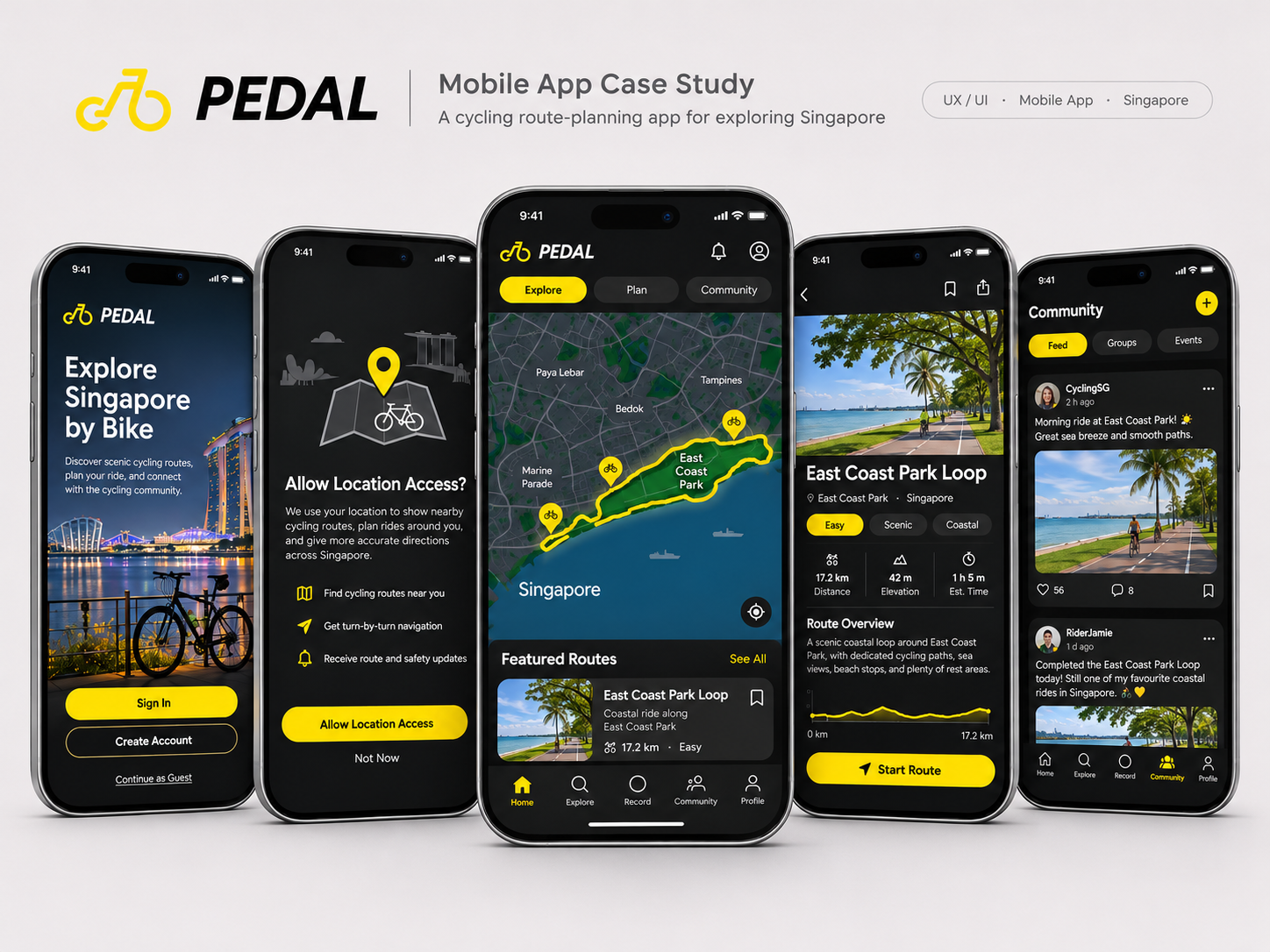
PEDAL is a conceptual mobile app I designed to bring these experiences together, making cycling route planning simpler, more reliable and enjoyable.
The project explored how a single digital experience could help cyclists discover new places, navigate suitable routes and share recommendations with others.
Role
UX/UI Designer — Independent Project
Responsibilities
User Research / UX Strategy / Information Architecture / User Flows / UI Design / Prototyping / Usability Testing
Key Deliverables
User Personas / Research Insights / Competitive Analysis / User Flows / Low- & High-Fidelity Prototypes / Interactive Figma Prototype / Usability Testing Findings
Tools
Figma / Maze
Year
2021
Research & Key Insights
Understanding how people plan their cycling experiences
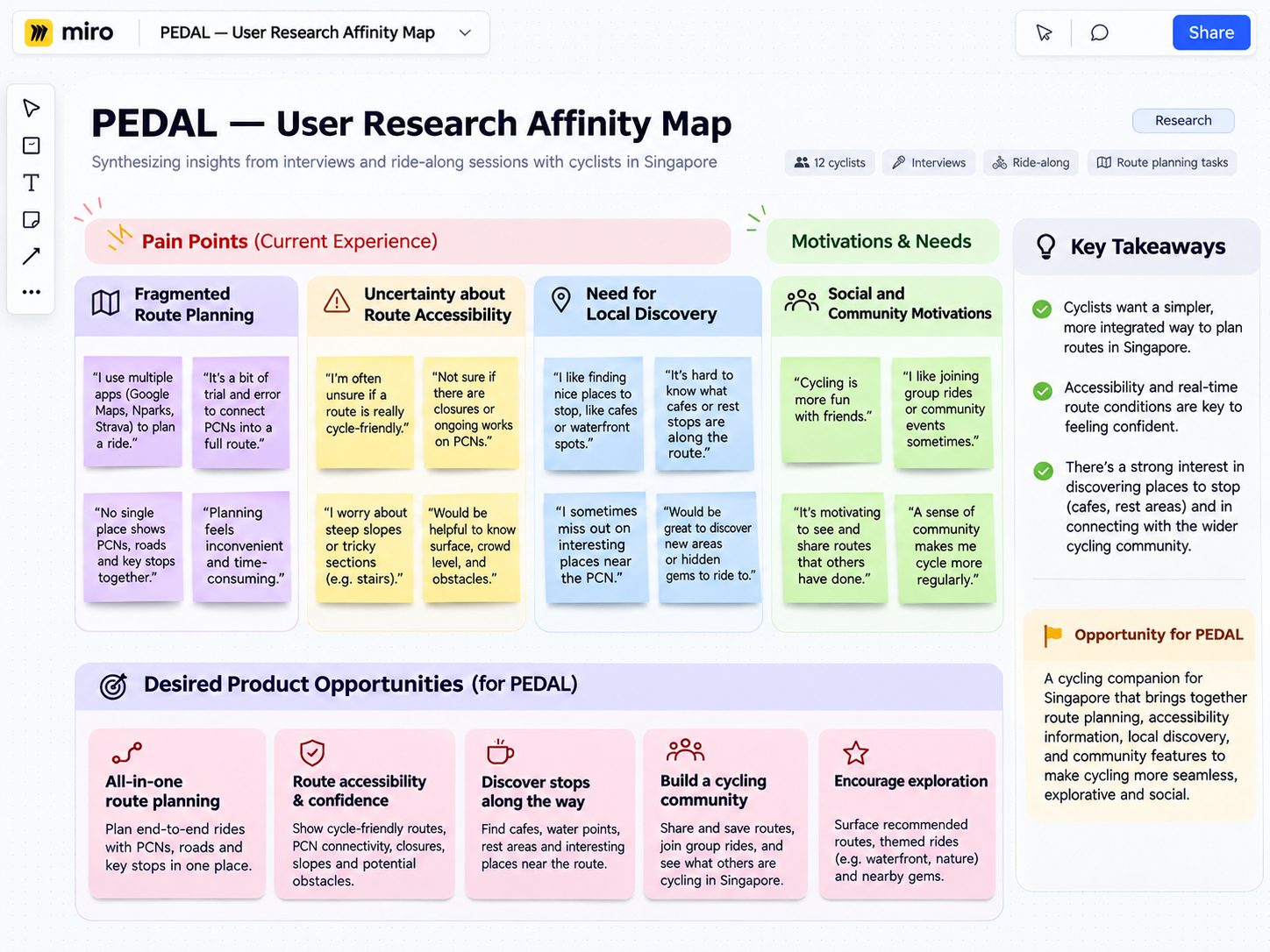
I conducted one-on-one interviews with cyclists of different backgrounds, interests and levels of experience to understand their motivations, planning habits and frustrations.
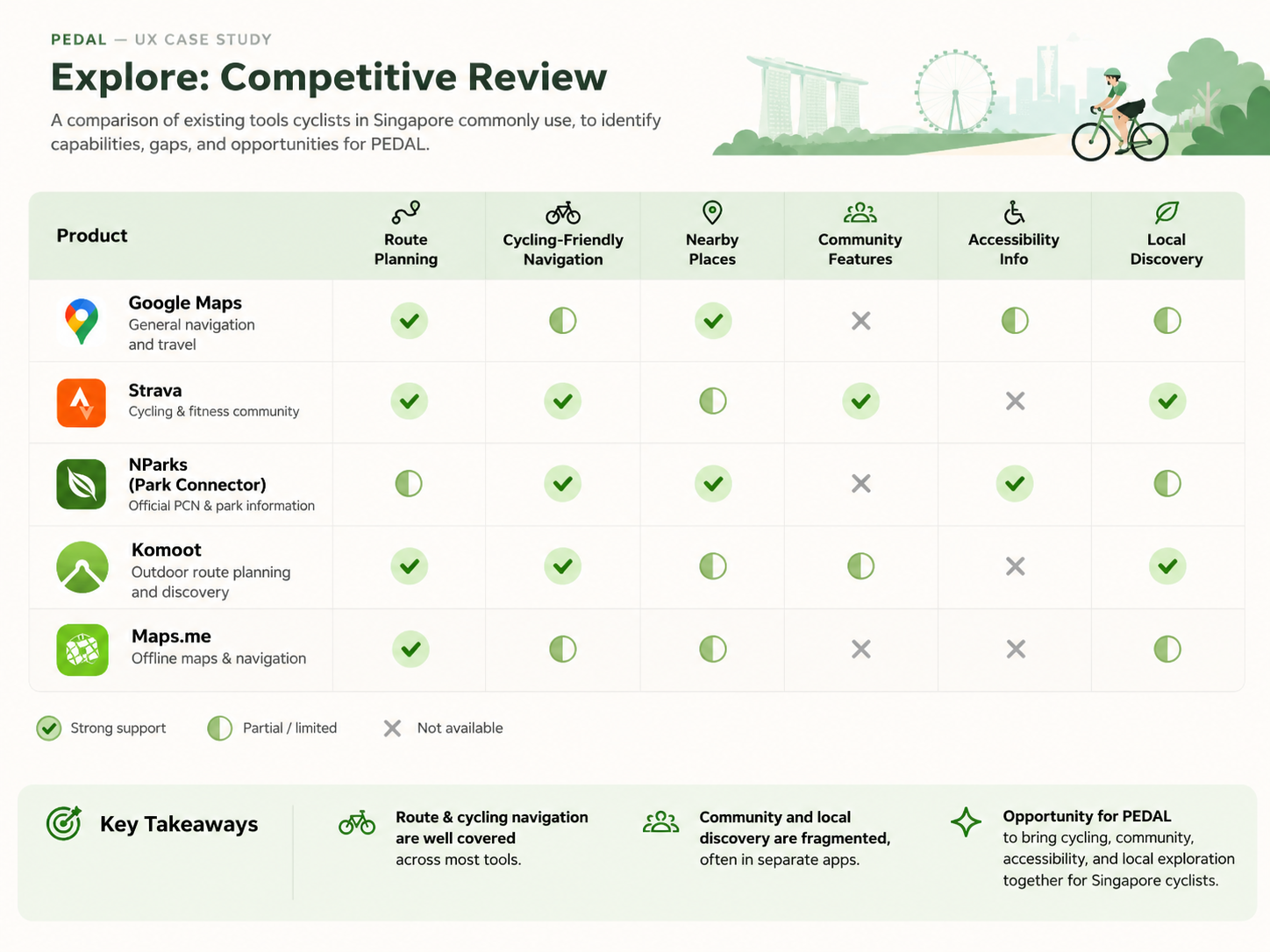
I combined the findings with a comparative analysis of existing tools, including Google Maps, Strava, Maps.me and NParks resources.
The research revealed three key opportunities:
01
Fragmented route planning
Cyclists relied on multiple platforms to find routes, check park connectors and discover nearby amenities. Planning a single ride could become unnecessarily complicated.
02
Uncertainty about route accessibility
Missing or outdated information about construction, stairs and inaccessible paths made it difficult to plan suitable rides with confidence.
03
Cycling is more than getting from A to B
For many participants, cycling was also about exploring new places, meeting friends and enjoying cafés or other stops along the way. Existing tools didn't bring all these interests together.
From Insights to Experience Design
Designing around two different cycling needs
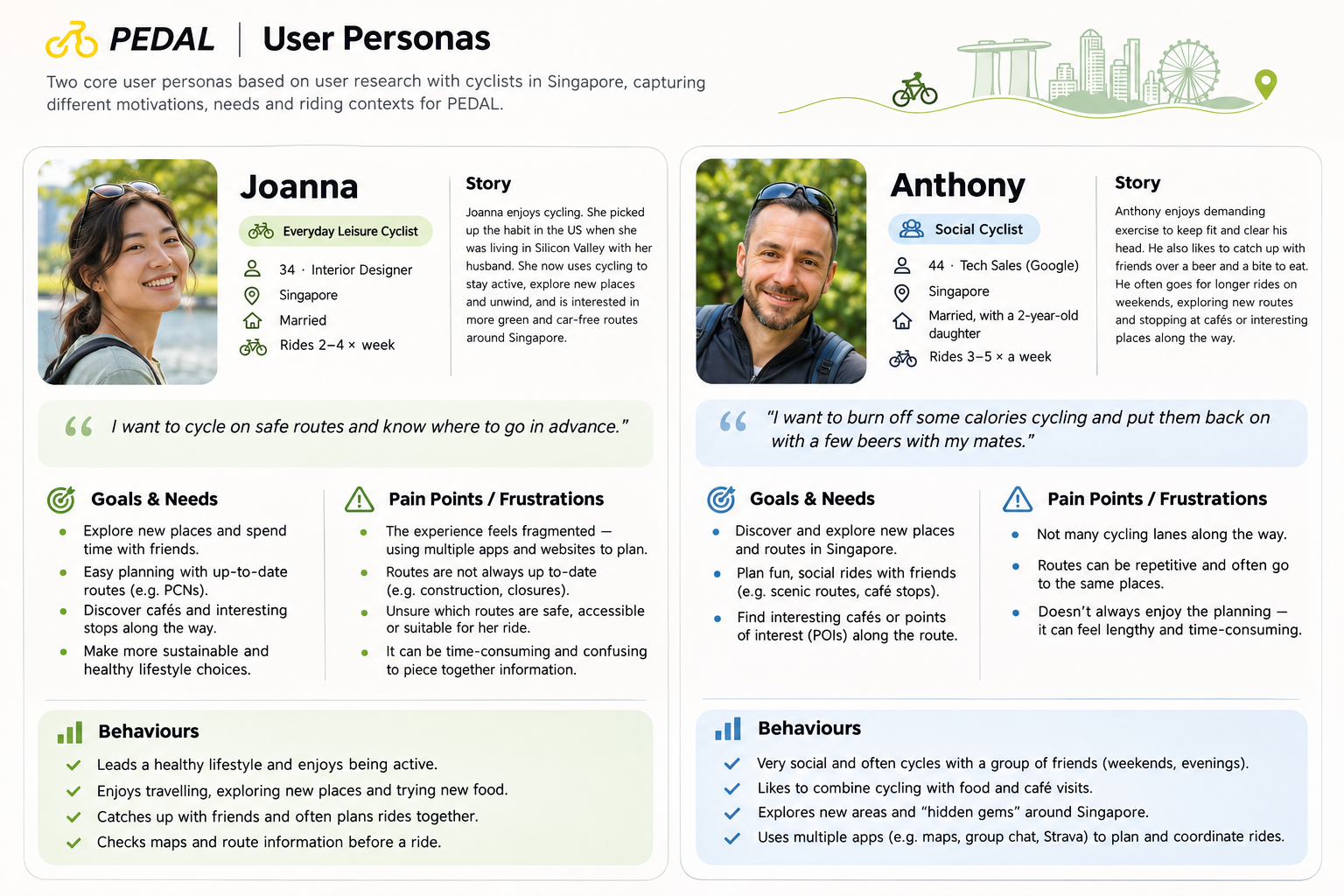
Based on the research, I developed two personas representing different motivations.
Joanna wanted to discover safe, accessible routes without having to navigate busy roads. Anthony wanted an easy way to plan enjoyable rides with friends and discover interesting stops along the way.
These perspectives helped frame the central design challenge:
How might we make cycling route planning simpler while helping people explore Singapore with greater confidence?
I explored a solution combining cycling routes, park connectors, cafés, recommendations and community updates within one experience.
Designing the Digital Experience
From early sketches to an interactive prototype
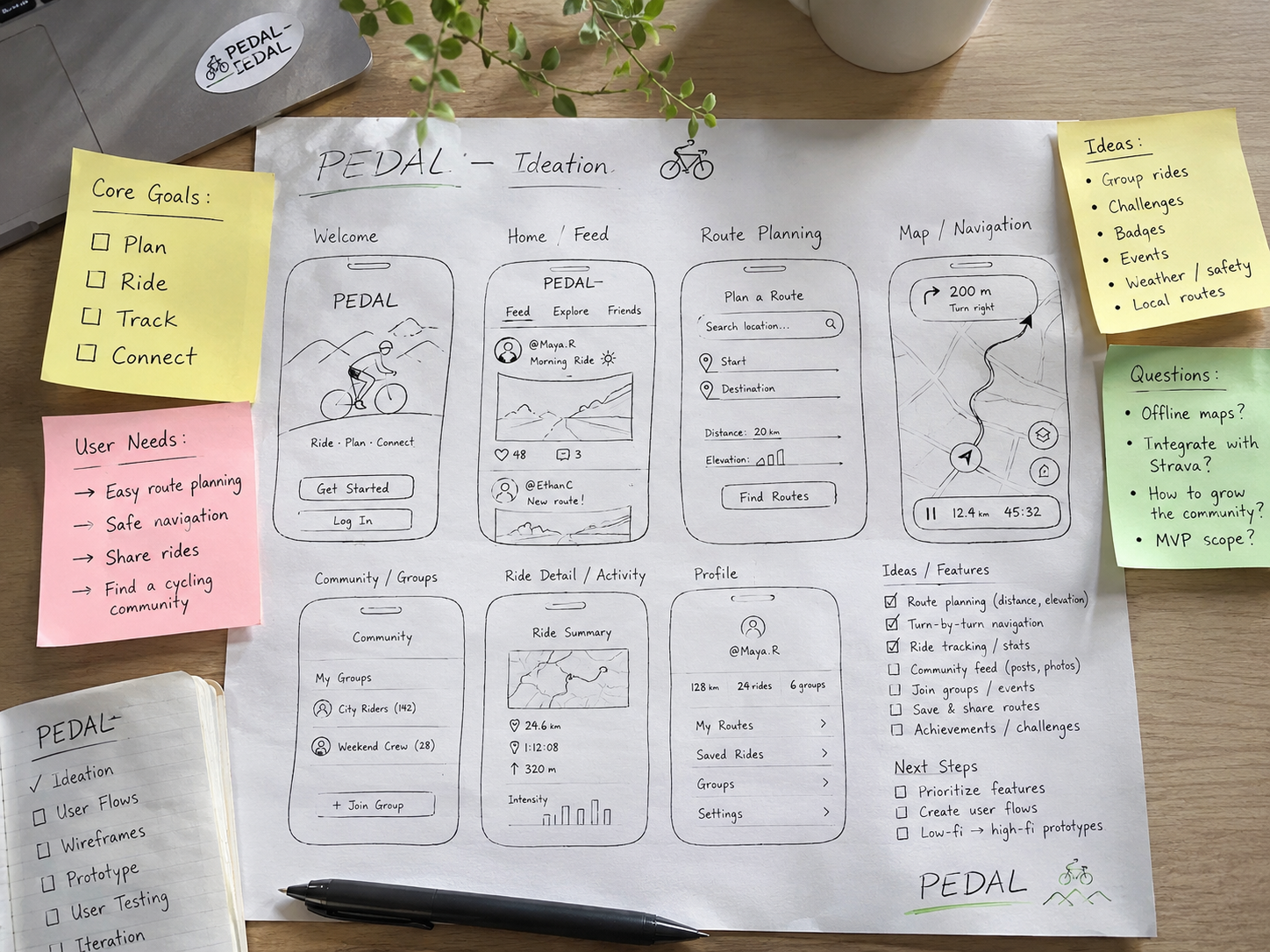
I began with hand-drawn wireframes and user flows, exploring how users could search for routes, select preferences, save destinations and share their experiences.
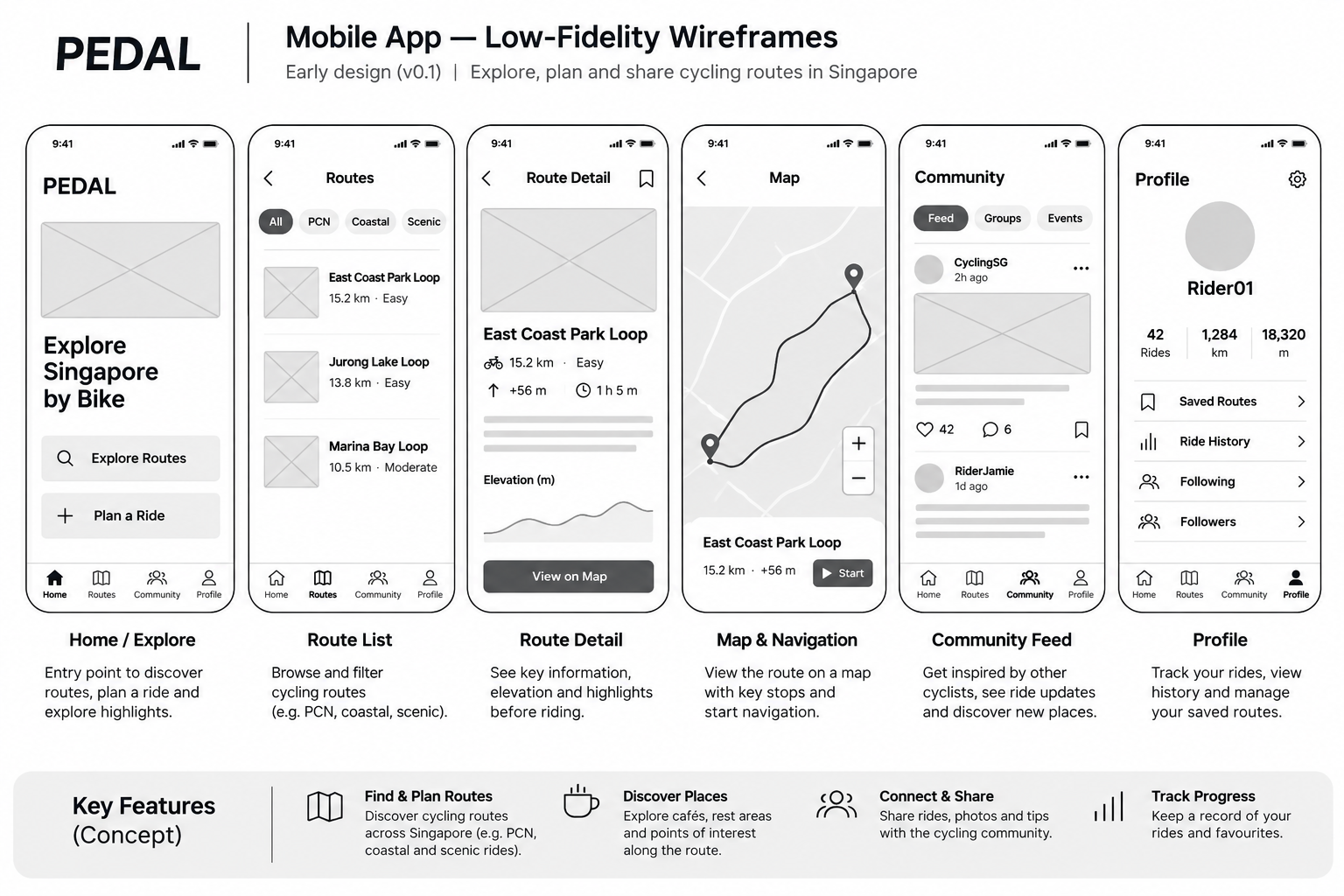
These early concepts informed the app's information architecture and navigation, which brought together route exploration, a community feed, activity summaries and saved favourites.
I then developed high-fidelity screens and an interactive prototype in Figma, translating the initial concepts into a complete mobile app experience.
Testing & Iteration
Letting user feedback shape the experience
I conducted iterative usability testing using Maze, initially testing the prototype in black and white to focus feedback on functionality and navigation before evaluating the visual design.
The testing explored route selection, preference filters, navigation, community features and the overall interface.
One particularly useful finding was that 80% of participants preferred to see suggested routes first and then refine them using their preferences, rather than selecting preferences before the route was generated.
This highlighted an opportunity to simplify the route-planning flow and make the experience more intuitive.
Outcome & Reflection
A research-led concept for more enjoyable cycling
The project resulted in an interactive high-fidelity mobile app prototype bringing route planning, local discoveries and shared cycling experiences together.
PEDAL remained a conceptual project, but it allowed me to take ownership of the full UX process — from understanding user needs and defining the problem to designing, prototyping and testing a digital experience.
It reinforced the importance of challenging initial design assumptions and using real user feedback to guide decisions.